


Mycoses are the second most common infectious skin diseases after coccalis pyoderma, and foot mycoses are the first not only among all mycoses, but also among any pathology of the foot.They are caused by a wide group of pathogenic fungi.In recent years, the number of cases of mycosis has increased, which is largely due to endogenous factors - an increase in the incidence of diabetes mellitus and circulatory pathologies in the distal parts of the upper and lower limbs.
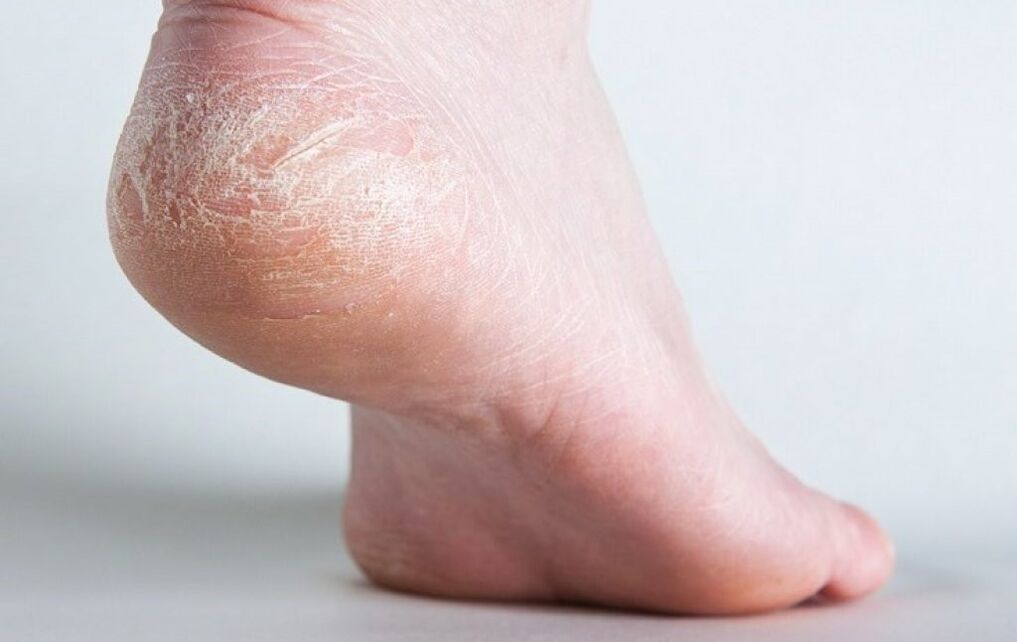
Some patients with dermatitis consider them to be an aesthetic or temporary problem and do not even ask themselves how to treat the fungus on the body, they just try to disguise the external manifestations of the infection under clothes, shoes or foundation.But you should not expect that the fungus will go away by itself: in the absence of appropriate therapy, mycoses can spread quickly and affect all new tissues and areas of the body, and the person suffering from the disease poses a serious threat to others, especially his household.The insidiousness of the fungus is also manifested in the fact that it easily reoccurs if the therapy has not been completed successfully.
In this article, we will tell you how and how to treat skin fungus and what symptoms indicate its presence.
Causes of fungal diseases
Fungal infections are different, but the main causative agents of the disease are dermatophytes, yeast-like fungi and molds.There is a system that takes into account the depth of penetration and localization of the infection, which distinguishes:
- Keratomycosis affects only the superficial stratum corneum of the epidermis and the hair cuticle.
- Dermatomycosis - deeply affects the skin and its appendages - nails and hair, but does not affect the subcutaneous tissue (the largest group, which includes onychomycosis and foot mycosis).
- Candidiasis - in addition to the above, it can also affect the mucous membranes and internal organs (caused by yeast-like fungi of the genus Candida).
- Deep mycoses are systemic mycoses that can infect the subcutaneous tissue, lymph nodes, otorhinolaryngology, lungs, gastrointestinal tract, brain and central nervous system as a whole (caused by yeasts and yeast-like fungi).
- Pseudomycosis - affects only the stratum corneum, nails and hair are not affected (it is caused by the bacterium Corynebacterium minutissimum, which was previously confused with fungi).
The most common types of skin mycoses are dermatophytosis - dermatomycosis caused by fungi from three genera: Trichophyton, Epidermophyton and Microsporum.The vast majority of intraepithelial changes of the skin and its appendages are the result of trichophytosis, epidermophytosis and microsporia, and the disease most often affects the skin of the feet and nails.How can a fungus become infected?Several factors can contribute to this:
- visiting public baths and saunas, swimming pools and water parks, public beaches, gyms, solariums and manicure/pedicure rooms, massage parlors, as there is a particularly high risk of foot or hand contact with contaminated surfaces in these places;
- trying on someone else's shoes or using shared shoes;
- insufficient foot hygiene, especially in case of excessive sweating;
- wearing closed shoes for a long time, which do not allow the foot to "breathe";
- living with a person who already suffers from skin fungus;
- Damage to the skin or nails with shoes that are too tight - the fungus enters the body more easily through damaged areas.
A significant factor is the increased humidity and temperature to which the feet are constantly exposed.In these conditions, the fungus develops most actively, so fungal infections often occur in regions with a subtropical climate, or where people wear warm shoes for a long time - in regions with a cold climate.In foot skin mycosis, the primary localization of the fungus is usually the interdigital folds, but as the disease progresses, the lesion extends beyond them.
FYI
According to 2010 data from the Ministry of Health, mycosis of the feet (including onychomycosis) and hands was registered in more than 220,000 people.
However, mycoses do not only affect the skin of the feet;the disease can occur almost anywhere, including the face.Large folds are often affected, especially the inguinal-femoral folds, legs and buttocks.
Mycoses of the skin have specific symptoms that are quite easy to spot, and they are:
- Flaking and dryness are one of the first signs of infection.Individual scales first appear on the affected area, caused by the shedding of the upper layer of the epidermis.With deeper penetration of the fungus, active exfoliation occurs, which only increases over time.
- White or red spots are round in shape with clearly defined edges.It is very important not to miss this symptom at the initial stage of the disease, since at this time the spot may be unique and small in size.Later, new spots appear, which gradually merge with each other.
- Thickening of the skin.Affected areas become dense, rough and rough, and often change color: the skin changes from pinkish or white to yellowish or grayish.
- Small rashes, the appearance of fluid-filled blisters.
- Partial hair loss.
- Itching and burning are one of the most common symptoms of skin fungus.It may be present all the time or appear only intermittently.Here it is important to understand that itching and burning can also be a sign of other skin conditions, such as allergies.
Do not ignore the appearance of cracks and calluses on your feet.Although they are not symptoms of a fungal disease in themselves, the fungal infection enters the body much faster through them.
How to cure skin fungus
Traditionally, two approaches to combating skin fungus can be distinguished.One is non-medicinal, in which various traditional medicines are used, the second is pharmacological.
The so-called home methods include the use of baths with herbal infusions, the treatment of skin fungus with iodine, soda or vinegar solution... The effectiveness of such treatment of skin fungus has not been clinically proven.If it can help, then only in the very early stages of the development of the disease, because most folk remedies cannot penetrate the deep layers of the epidermis, where the fungal colony is usually located.Therefore, in the case of any mycosis, you should not waste time and aggravate the situation, but you should consult a doctor in order to diagnose and prescribe the appropriate therapy.
A significant effect can be achieved by the systemic treatment of skin fungus in the body, using drugs in the form of capsules or tablets.Modern products contain substances that can stop the growth of new spores, block cell division at the DNA/RNA level, and destroy the cell membranes of the fungus.However, systemic antifungals (also known as systemic antifungal and fungistatic drugs) have many side effects and contraindications;they cannot be taken together with certain medicines - diabetes, antihistamines, contraceptives.Restrictions on the use of tablet forms include, for example, blood diseases, kidney or liver diseases.In addition, a strict hypoallergenic diet is recommended during treatment.All this narrows down the possibilities of systemic therapy.
Creams, sprays and solutions are an effective (clinically proven) method for the local treatment of skin fungi and onychomycosis, which has few contraindications.It has a high cure rate, can be used at any stage of a fungal infection, and can be used in conjunction with systemic therapy to reduce the dose of oral medications.
The antifungal components found in gels, ointments and solutions are mainly allylamines, azoles or pyrimidines, which inhibit the vital activity of the fungus, deprive it of food, stop its development and spread to other areas of the skin.Local therapy with these drugs makes it possible to create a high concentration of the active substance in the skin, on the surface of the nail and in its cavities, which remain for weeks after the end of the treatment.It is important that when using external agents, the active substance almost does not enter the systemic bloodstream, and therefore does not have a negative effect on the body as a whole.
Many topical antifungal agents have anti-inflammatory and antibacterial effects, soften the skin, eliminate itching and redness, can be easily applied to the affected surface, and with sprays and solutions, even hairy body parts can be comfortably treated in case of damage.The duration of treatment with external agents and the frequency of their use is determined by the attending physician.
Ringworm is easier to prevent than to treat, but if signs of skin fungus are detected on the body, treatment must be started immediately.It is important that you do not start the process and do not take the appropriate measures in time, but you should contact a professional.The doctor will tell you how to cure skin fungus quickly.Attempts at manual treatment in this case can only make the situation worse.
Antifungal cream
As a medicine for the treatment of fungal skin infections, you can choose a cream based on naftifine (1%), which belongs to the class of allylamines.The drug's mechanism of action is based on the ability of the active ingredient to slow down the synthesis of ergosterol, the building material that makes up the cell wall and membrane of the mushroom.As a result, the mycelium loses its ability to grow, which gradually leads to the death of the entire colony.
The drug is active against all the main pathogens of mycosis and can be prescribed for the treatment of trichophytosis, epidermophytosis, microsporia, candidiasis and skin aspergillosis, pityriasis versicolor, sporotrichosis.The cream has an antibacterial and anti-inflammatory effect, reduces the likelihood of secondary bacterial infections and helps eliminate the symptoms of inflammation, especially itching.
The cream penetrates deep into the skin and creates a stable concentration of the antifungal agent in different layers.After application to the skin, less than 6% of naftifine reaches the systemic circulation.
Indications for the use of the drug are as follows:
- fungal infections of skin folds and smooth skin;
- interdigital mycoses;
- onychomycosis (nail fungus);
- skin candidiasis;
- pityriasis versicolor;
- ringworm (with or without itching).
The cream has few contraindications.These include individual intolerance of the components, as well as pregnancy and breastfeeding, since the safety and effectiveness of the drug in this group of patients have not yet been studied.Use the cream with caution in children.
Instructions for use: If the skin is affected, it is sufficient to apply the cream once a day to the affected surface and adjacent areas after cleaning and drying.The duration of treatment is two to eight weeks (for candidiasis - four weeks).
In order to prevent relapses, it is recommended to continue the treatment for another two weeks after the cessation of clinical symptoms.
The cream is available without a prescription in an aluminum tube (30 g).You can also order the product online.